
Mentoring, teams, and professional development
Delegation, resolving staff conflict, motivation theories, coaching and mentoring, succession planning, institutional accountability, and certification maintenance.
Lesson 29 of 40 · about 21 minutes · Outline areas: 7.5 Institutional structures and accountability; 7.8 Coaching and mentoring; 7.10 Professional development expectations and standards
Learning objectives
- Delegate effectively and resolve conflict between staff members.
- Apply classic motivation theories (Maslow, Herzberg, McGregor) to managing planning staff.
- Distinguish coaching, mentoring, and sponsorship, and describe what makes mentoring work.
- Plan for succession and measure whether leadership development is working.
- Explain how leaders build accountability and inclusive practice into institutions.
- Describe professional development expectations for certified planners, including Certification Maintenance.
Key concepts
Delegation
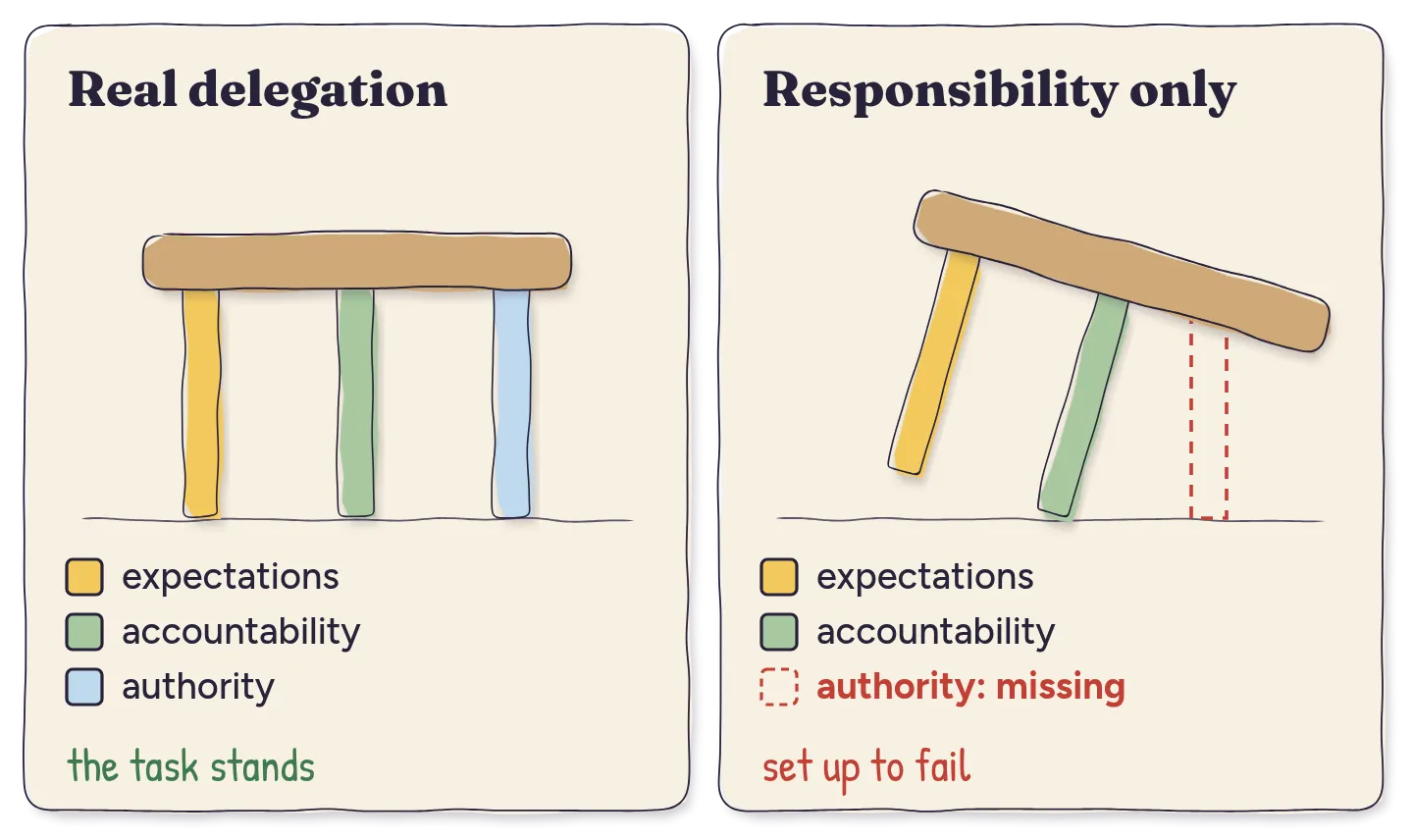
Delegation develops staff and frees leaders to lead, but only if it's real. Effective delegation gives the person:
- clear expectations: what outcome, by when, to what standard;
- the authority to make the decisions the task requires; and
- accountability: agreed check-ins and ownership of the result.
Match the task to the person's readiness, and increase the challenge over time. Delegating responsibility without authority sets people up to fail.
7 more sections follow in the full lesson.
Key terms
- Delegation: Assigning responsibility and authority for a task, with accountability.
- Coaching: Short-term development of specific skills or performance.
- Mentoring: A longer-term relationship supporting professional and career growth.
- Sponsorship: Using one's influence to create opportunities for someone else.
- Stretch assignment: A task just beyond a person's current experience, used for growth.
- Succession planning: Preparing internal candidates to fill key roles.
- Knowledge transfer: Capturing and sharing institutional knowledge before people leave.
- Certification Maintenance (CM): The continuing education AICP members must complete to keep certification.
- Accountability: Answering for decisions and results, openly.
- Hierarchy of needs: Maslow's ordering of needs from physiological and safety needs up to self-actualization.
- Hygiene factors: Herzberg's term for conditions, such as pay and policies, that prevent dissatisfaction but don't motivate.
- Motivators: Herzberg's term for factors, such as achievement and responsibility, that create satisfaction.
- Theory X and Theory Y: McGregor's contrasting assumptions that workers need control (X) or seek responsibility (Y).
Create an account to see the rest of this lesson
Every lesson and full-length practice exam is open to you. An account keeps your scores and progress in one place so you can see where to study next.
Just looking? The list of lessons and the sample questions are open to everyone.
Ready for exam-style questions?
The checkpoints in this lesson were written for it alone, so they never give away an exam question. To see how the Leadership domain is tested, take a full-length practice exam. It mixes all nine domains in exam proportions, and your results point you back to the lessons behind every question you miss.
Exams need an account, so your scores are saved. Create one to get started.